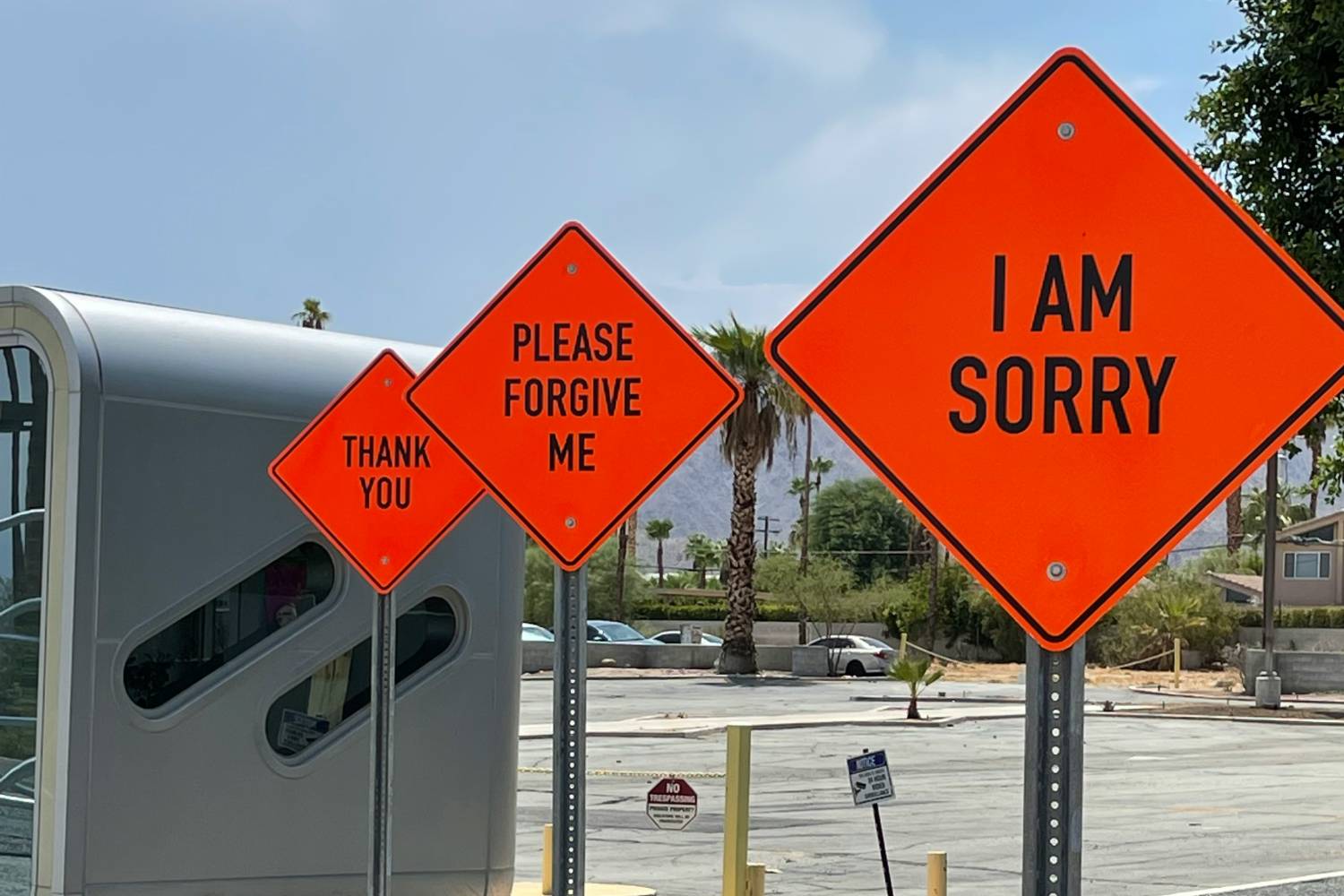
Before we start: I’m very sorry, for this post title isn’t really cutting everything I’m going to talk about. Sorry is a very common word in Dutch, and while it’s often used in the same way as it is in English, we’ve come up with our own meaning for it as well, as well as with some other, mostly familiar versions of it. Here’s why you hear sorry so often in Dutch, and why we don’t always mean it.
Sorry = sorry
In its most basic form, sorry literally means sorry. It’s used as an apology, when you’ve done something by accident, or you’ve knowingly done something you probably shouldn’t have. While English speakers often use it as an adjective (I’m sorry), in Dutch, it’s just a standalone interjection: sorry. In other words: you can’t be sorry in Dutch, you just use the word as a standalone term (which can also be done in English).
Even though sorry is the most common way of apologizing, it’s not our only way. The other common version is het spijt me, which means something along the lines of it regrets me / it fills me with regret. Spijt is also the noun that can literally be translated to regret in English. Oddly enough, while in English, you regret something, in Dutch, something regrets you. We also have vergeef me (Eng: forgive me), but that’s not used a whole lot these days.
Just like in English, sorry can also be used as a way of saying I didn’t catch that, could you repeat that?. In these cases, Wat zeg je? (Eng: What did you say?) is more common, but sorry is also used on a regular basis.
Sorry is also sometimes used as our version of I’m sorry to hear, when your conversation partner tells you something that’s annoying or sad for them, and even though it’s not even remotely your fault, you feel for them nonetheless. This use is kind of an anglicism, aka something we didn’t really do before English started to play a more prominent role in Dutch culture and language.
Sorry not sorry
Dutch people also use sorry where an English speaker would use excuse me, for example when you’re trying to pass someone in a busy street and they’re blocking your way. While sorry is the most common word to use in situations like these, pardon is also used (pronounced more or less the French way, with emphasis on the second syllable). Funnily enough, when you use excuse me?! when you want to stress how strange you find something that someone else says, you can use sorry in Dutch as well, as well as pardon.
While Excuseer me technically is correct Dutch, it’s considered very formal and archaic, and you’re not going to hear it being used in everyday conversation.
Sorry hoor
Now for the odd one: sorry can also be used in Dutch to mean pretty much the exact opposite of sorry. When this is the case, it’s often paired with the filler word hoor (which has nothing whatsoever to do with red light districts, despite its pronunciation), but it can be used on its own as well.
This is often done when someone suggests or does something you don’t agree with. When someone cuts in line in front of you at the supermarket, you could say something like Sorry (hoor), but I was here before you. You’re not actually sorry, you’re just claiming overall moral victory in advance by being polite while the other person is doing the opposite by cutting the line.
Other versions
The overall Dutch term for an apology, as a noun, is verontschuldiging – German speakers will recognize this as our version of Entschuldigung, which can both be used as a noun as well as an interjective that means excuse me – in German, that is, for in Dutch, it’s only a noun (or a verb: verontschuldigen).
Dutch also features the noun excuus, which is our version of excuse, as in: some kind of explanation on why you did a particular thing. When this explanation is regarded to be a way of getting out of something (De brug stond open, Eng: The bridge was open), it’s often called a smoes or smoesje – more about diminutives here.
Long sorry short
Sorry in Dutch often means the same as it does in English, although the way we use it in a sentence is usually a bit different. It can be used as an apology, as a polite way of interrupting someone, or when you didn’t quite catch what they said; it can even be used when you’re not sorry at all, but you’re just claiming moral dominance in a given situation.
I do apologize if this post has been a bit chaotic or confusing, for the details of the Dutch sorry are somewhat strange. If so, it does fill me with the utmost regret. Kind of. Actually not really. Sorry not sorry.